HEPATITIS B
Vaccine-Preventable Series: Hepatitis B, explained—what it does, how it spreads, and how we prevent it

WHAT DOES THIS DISEASE DO
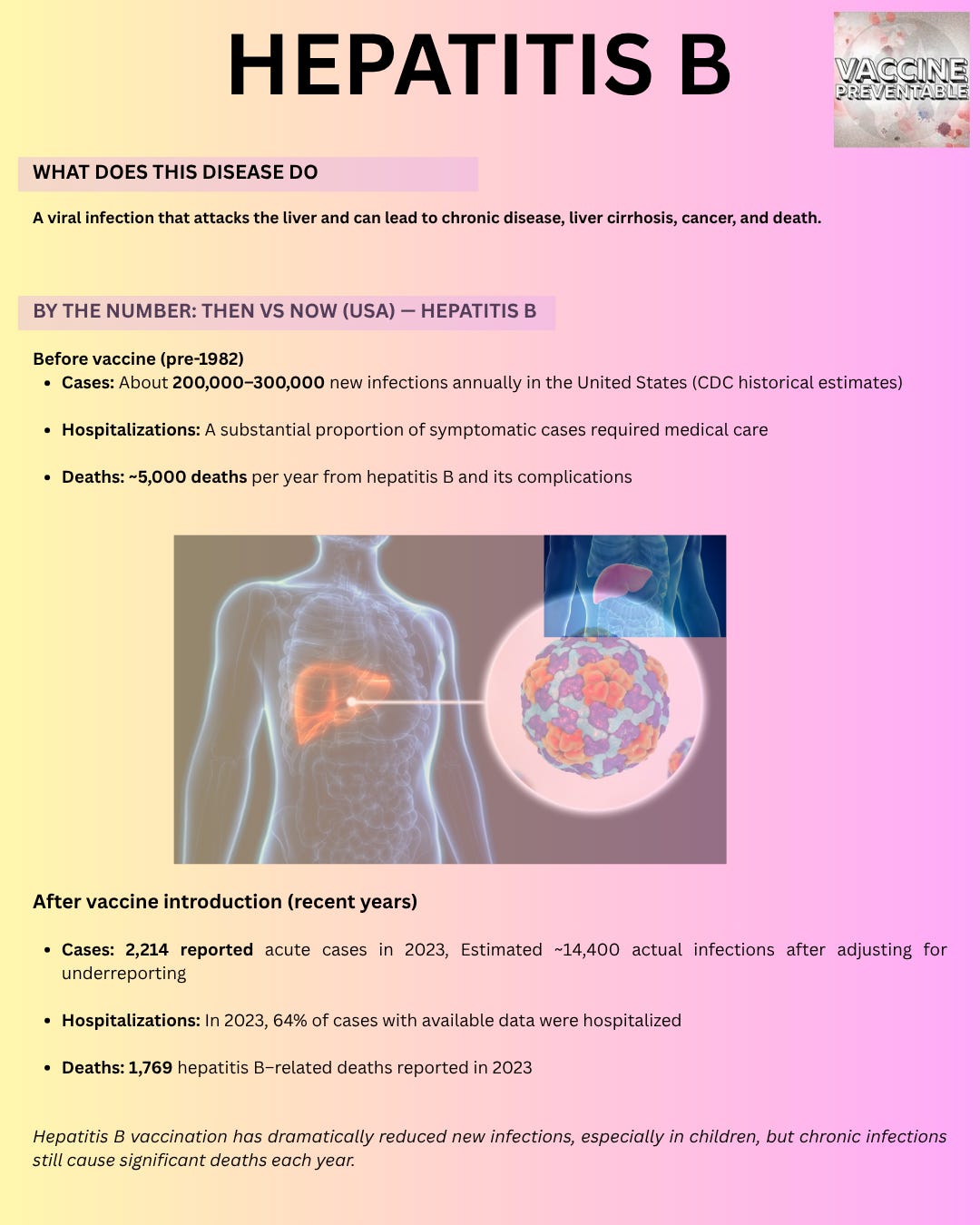
A viral infection that attacks the liver and can lead to chronic disease, liver cirrhosis, cancer, and death.
BY THE NUMBER: THEN VS NOW (USA) — HEPATITIS B
Before vaccine (pre-1982)
Cases: About 200,000–300,000 new infections annually in the United States
Hospitalizations: A substantial proportion of symptomatic cases required medical care
Deaths: ~5,000 deaths per year from hepatitis B and its complications
After vaccine introduction (recent years)
Cases: 2,214 reported acute cases in 2023. Estimated ~14,400 actual infections after adjusting for underreporting
Hospitalizations: In 2023, 64% of cases with available data were hospitalized
Deaths: 1,769 hepatitis B–related deaths reported in 2023
Hepatitis B vaccination has dramatically reduced new infections, especially in children, but chronic infections still cause significant deaths each year.
THE VACCINE
Who gets it:
All infants (at birth)
Children and adolescents
Adults at risk or unvaccinated
Doses:
2, 3, or 4 doses, depending on the vaccine type and schedule
WHO IS AT RISK
Unvaccinated individuals
Infants born to infected mothers
Healthcare workers
People with multiple sexual partners
People who inject drugs
HOW IT SPREADS
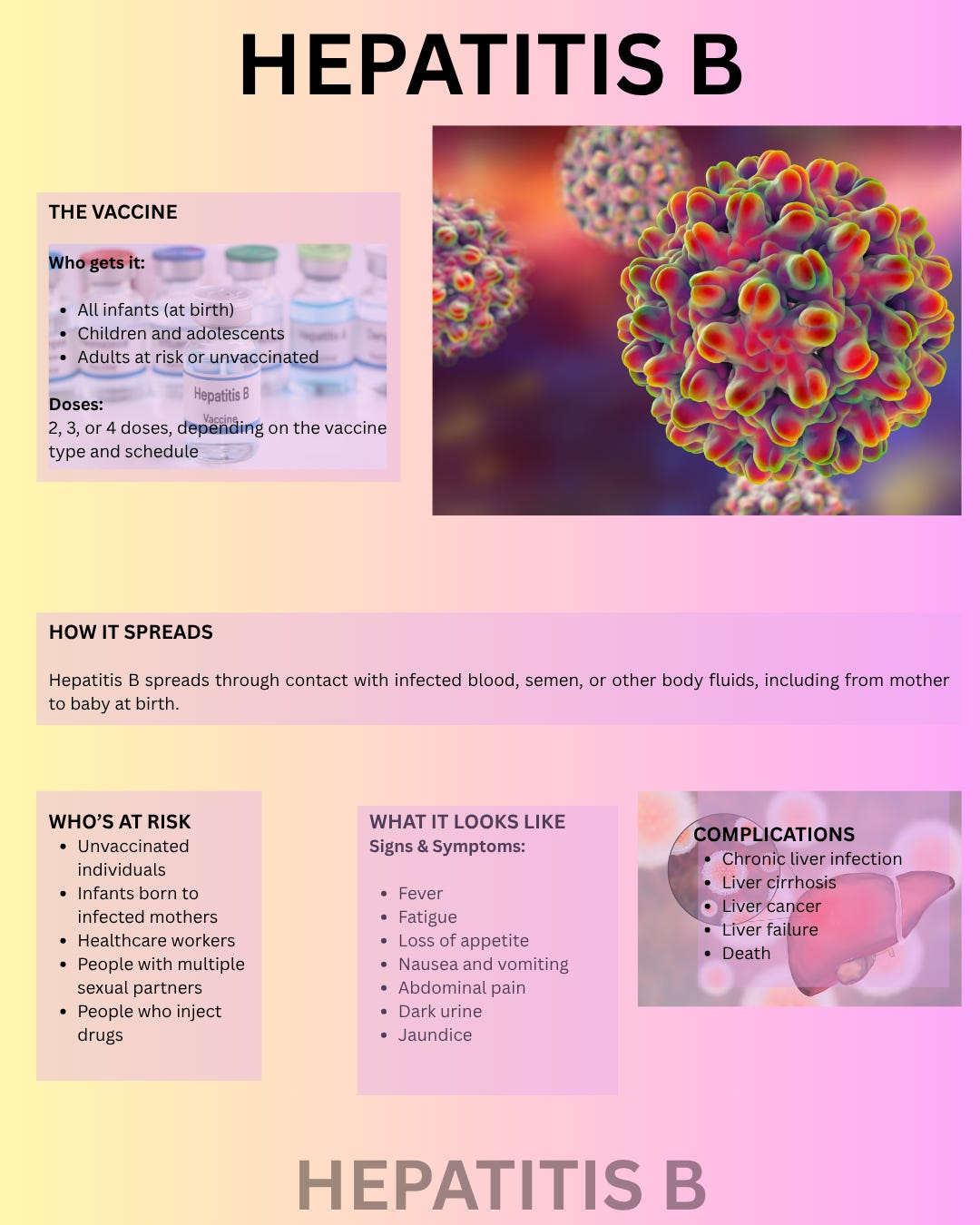
Hepatitis B spreads through contact with infected blood, semen, or other body fluids, including from mother to baby at birth.
WHAT IT LOOKS LIKE
Signs & Symptoms:
Fever
Fatigue
Loss of appetite
Nausea and vomiting
Abdominal pain
Dark urine
Jaundice
COMPLICATIONS
Chronic liver infection
Liver cirrhosis
Liver cancer
Liver failure
Death